The sea remains in its place, yet the ways of walking upon it are slowly disappearing.
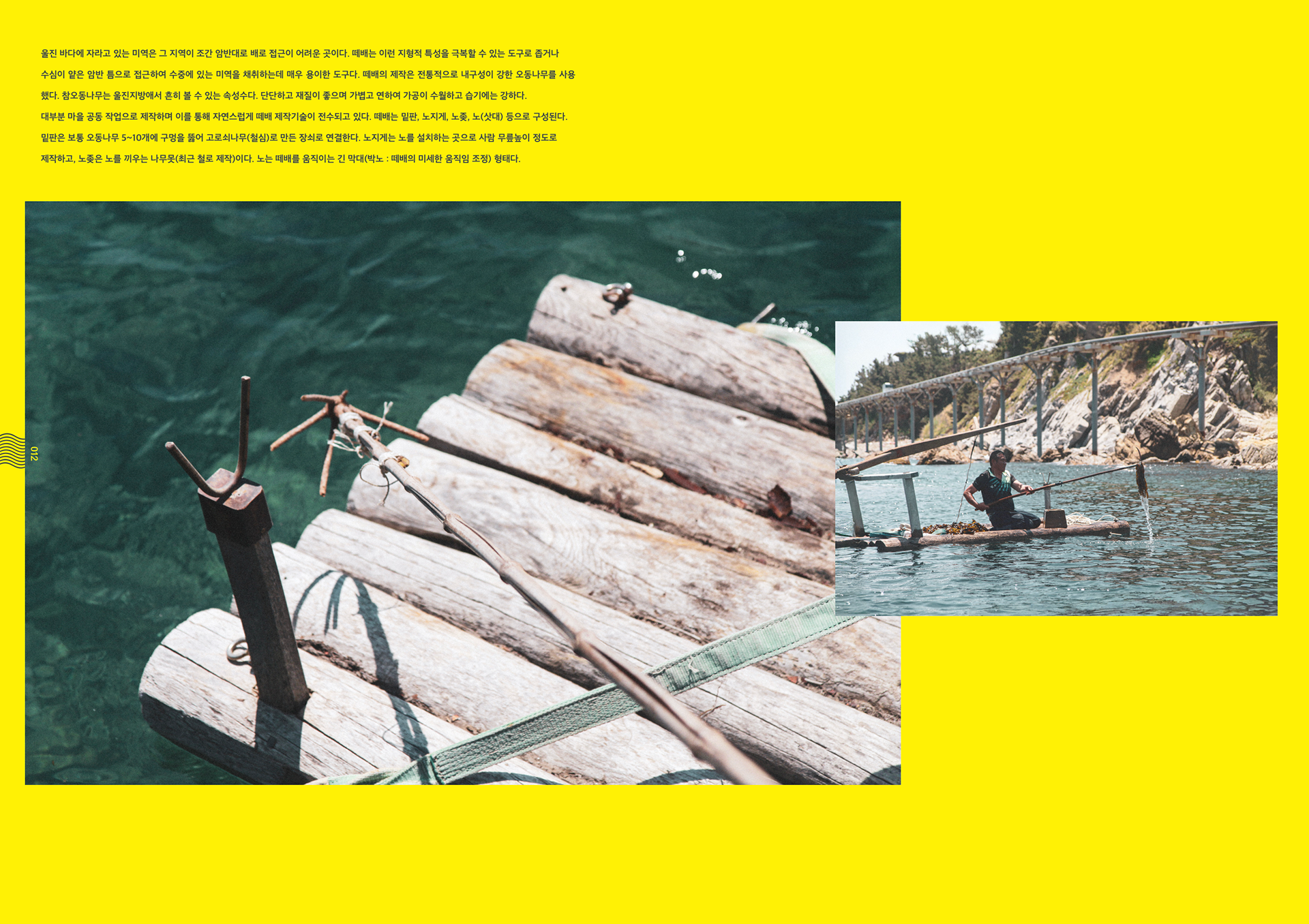
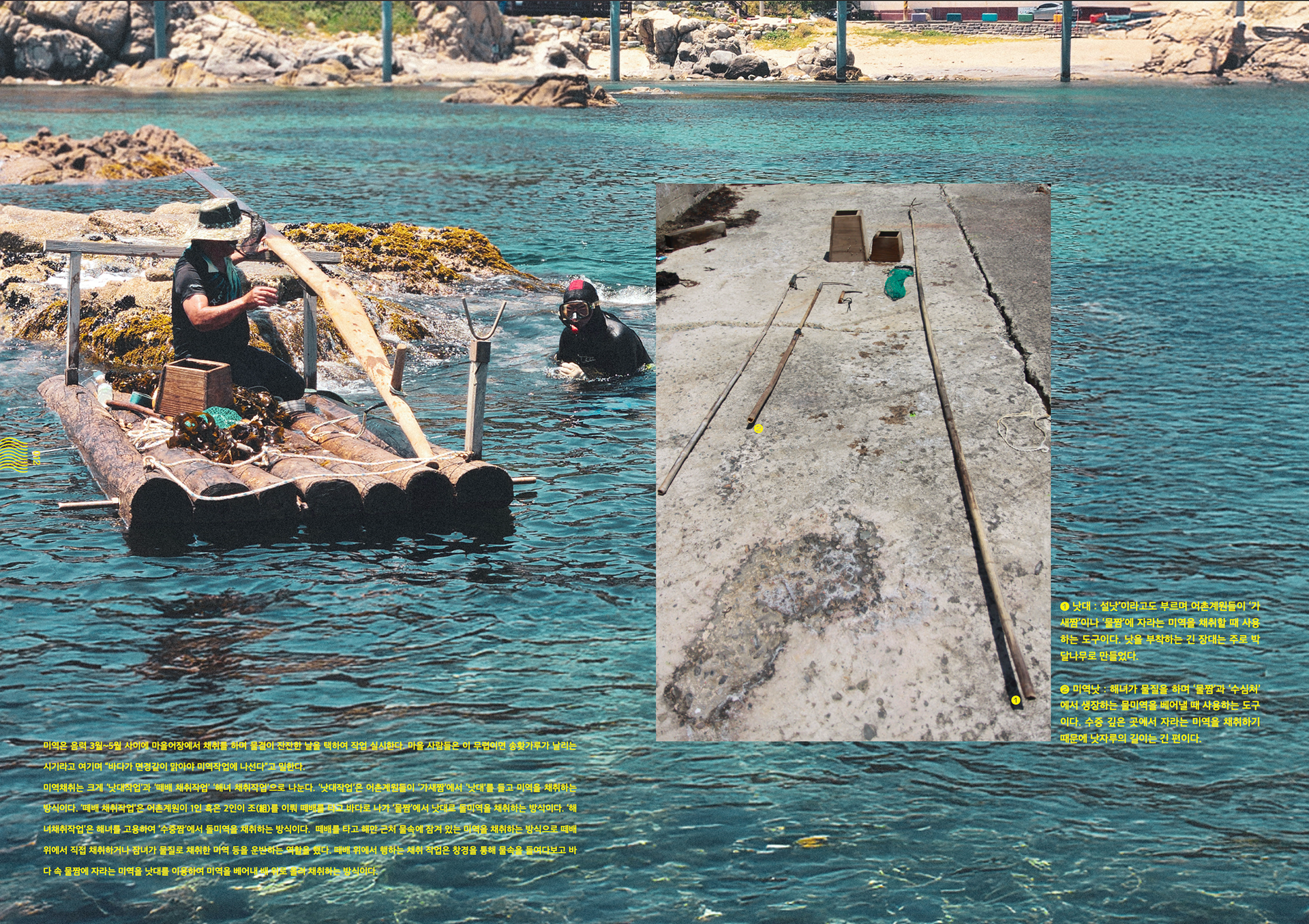
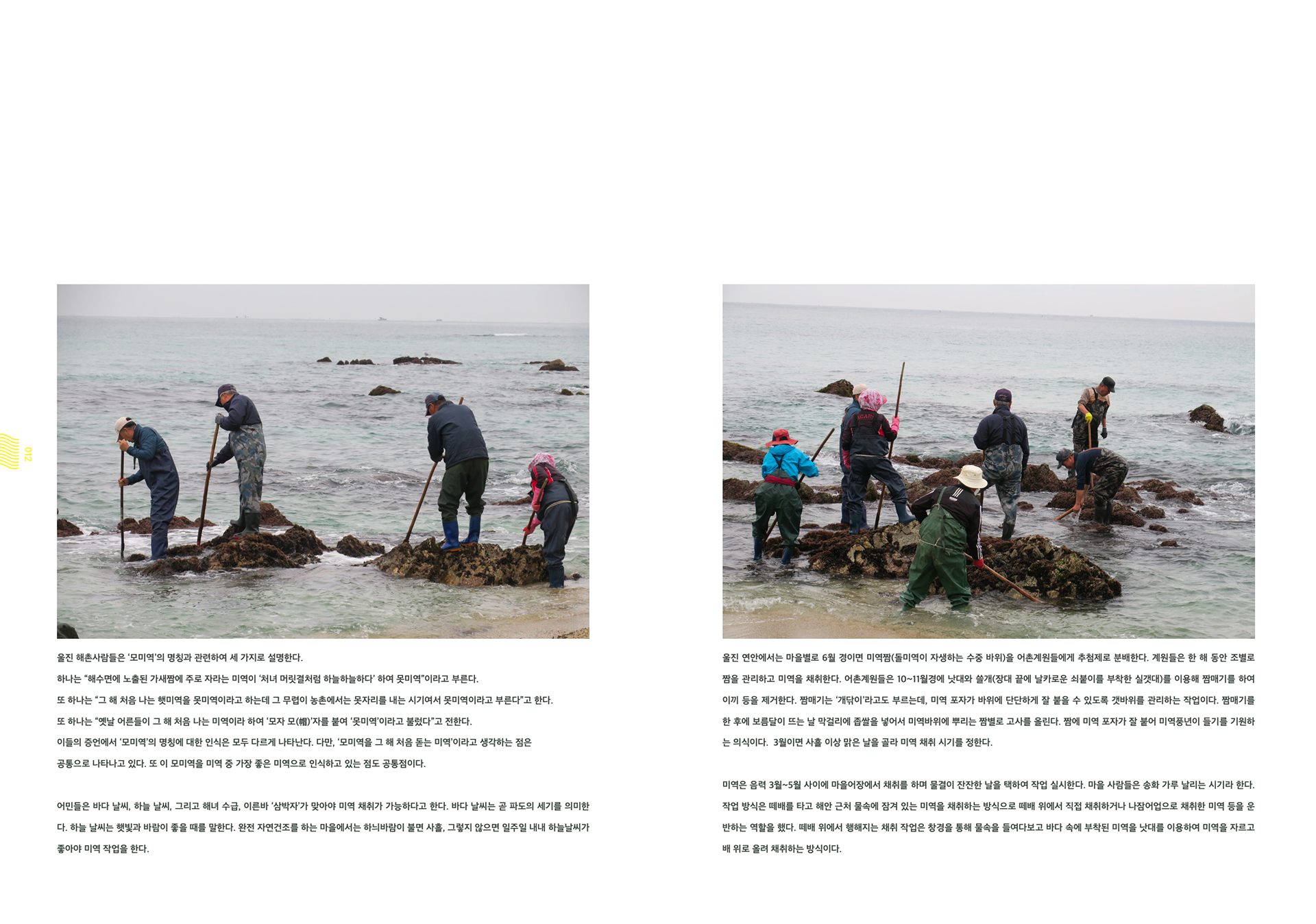
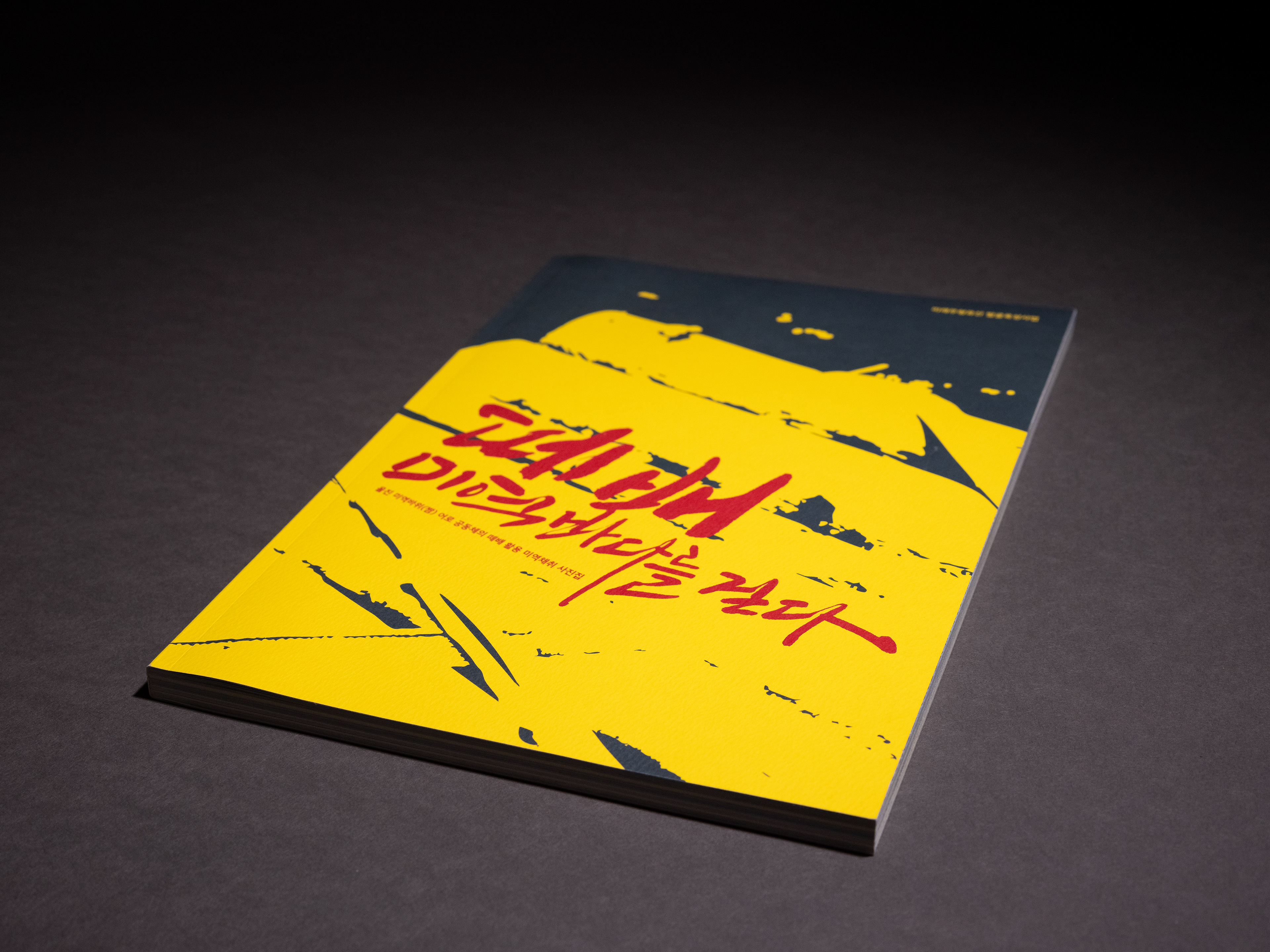
This photobook documents the coastal community of Uljin, where seaweed was harvested from the rock shores—known as “jjam”—using traditional ttebae boats. Built upon the research of seven scholars, the photographs form another layer of memory that extends beyond written records.
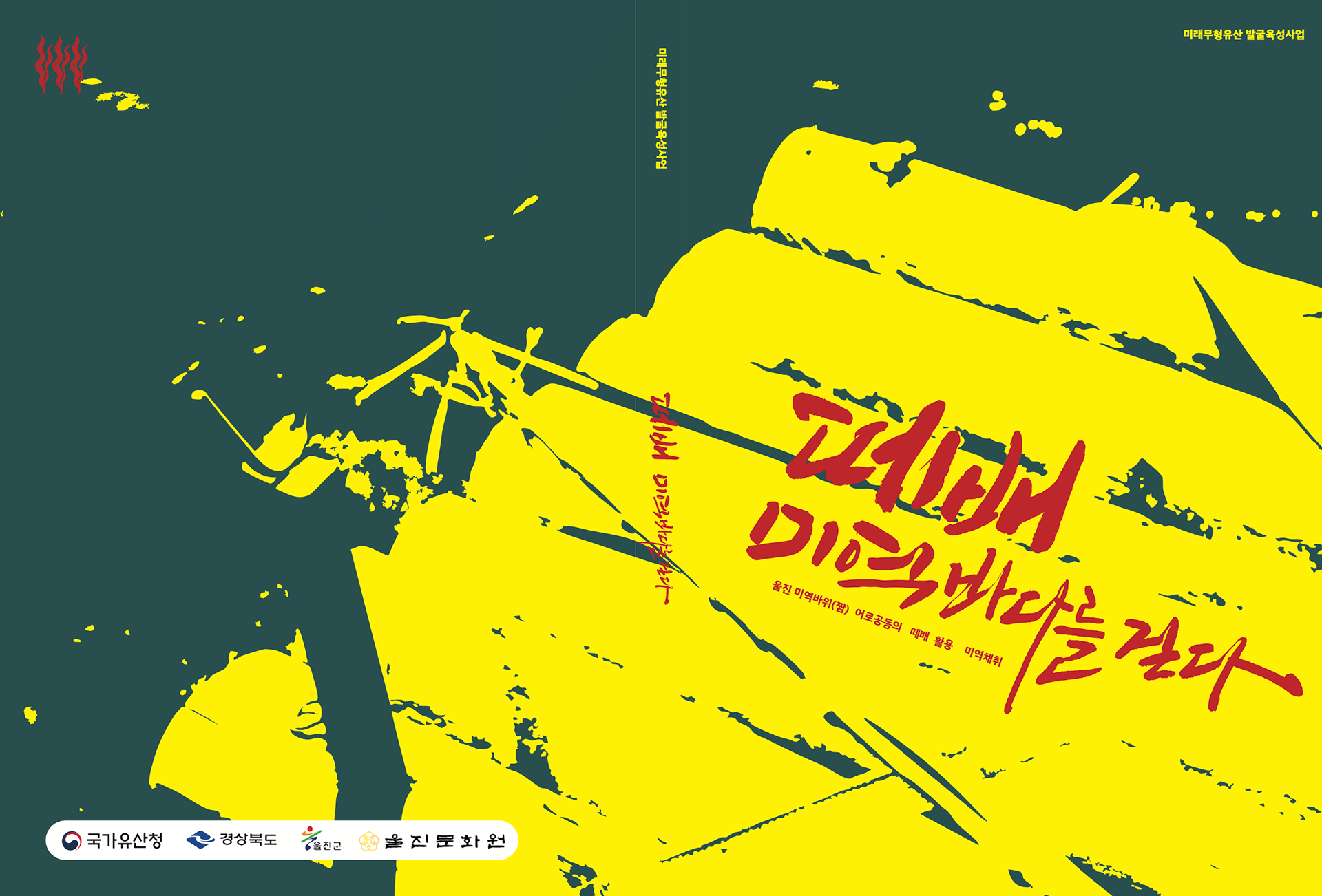
The design begins with a contrast of materiality.
The deep, rich tones of seaweed are set against the raw, original color of wood—the yellow of the ttebae. This yellow is not merely a color choice, but a symbolic marker of the first human tool placed upon the sea, representing the beginning of labor and livelihood.
Graphic elements are reduced to their essential form.
Wave-like pictograms evoke both the motion of the sea and the organic shape of seaweed. Through repetition, they visualize the rhythm and temporality of the ocean. These elements do not function as decoration, but as subtle signals that awaken sensory memory.
The editorial structure follows the flow of process.
The entire cycle of seaweed harvesting is organized in a timeline format, guiding the viewer through preparation, gathering, transportation, and drying. Rather than presenting isolated results, the book unfolds as a continuous narrative of labor and life, allowing the reader to metaphorically walk across the sea with each turn of the page.
This work is both an act of archiving a disappearing intangible heritage and a proposal for how we might walk upon that time once more.
Documentation here is not merely about preservation, but about re-experiencing what has been lost.