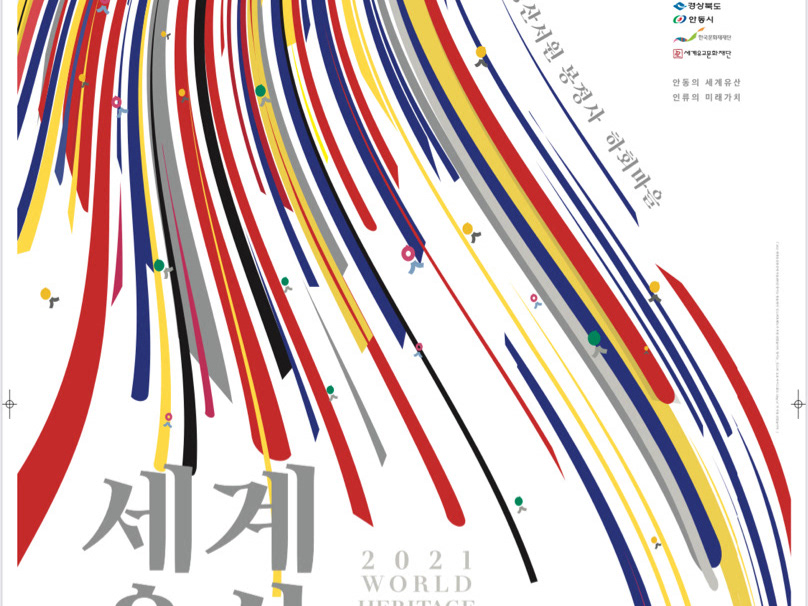
This work was an attempt to place a small space of learning for children within the quiet grounds of Mukgye Seowon in Andong.
Though temporary in structure, the intention extended beyond a simple installation. It sought a way of existing without disrupting the rhythm of its surroundings. To soften any sense of dissonance with the hanok architecture, the frame was constructed in wood, while the surfaces were finished with printed transparent PET—allowing the structure to settle lightly into the space rather than assert itself.
Drawing from the motifs of munbangsau (the four scholarly objects) and the crane-shaped scholar’s lamp of the yangban culture, this mini booth reinterprets traditional symbols through the eyes of children. It is not a rigid display, but a tactile and visual experience—an invitation to encounter tradition through presence rather than instruction.
The open lower structure serves not only a functional purpose but also allows the space to breathe. Air moves freely, light filters through, and the pavilion remains gently connected to its surroundings, never fully enclosed.
A space that does not insist on staying, but quietly passes through—
this small booth lingers somewhere between presence and disappearance.